Why Hands-On Learning Matters in Early Childhood Education: Building Skills Through Active Exploration
Young children are naturally curious about the world around them. They touch, sort, stack, compare, build, and experiment as they try to understand how things work. These everyday experiences are more than opportunities for play. They are an important part of how children learn.
In early childhood education, hands-on learning allows children to engage directly with materials, explore new concepts, and practise essential skills through active participation. Instead of simply observing or listening, children become involved in the learning process by doing something with what they are discovering.
Whether they are matching shapes, tracing letters, sorting objects, or experimenting with different materials, children have opportunities to connect new information with their own experiences.
Hands-on learning transforms abstract concepts into experiences children can see, touch, explore, and begin to understand.
Understanding how children learn through active exploration can help educators and families create more meaningful learning opportunities during the early years.
What Is Hands-On Learning in Early Childhood Education?
Hands-on learning is an approach that allows children to engage directly with materials, objects, and activities as they explore concepts and practise skills.
Rather than relying exclusively on verbal explanations or observation, children participate actively in the learning experience. They manipulate materials, make choices, test ideas, and discover relationships between objects and concepts.
In preschool and early childhood settings, hands-on learning can take many forms, including:
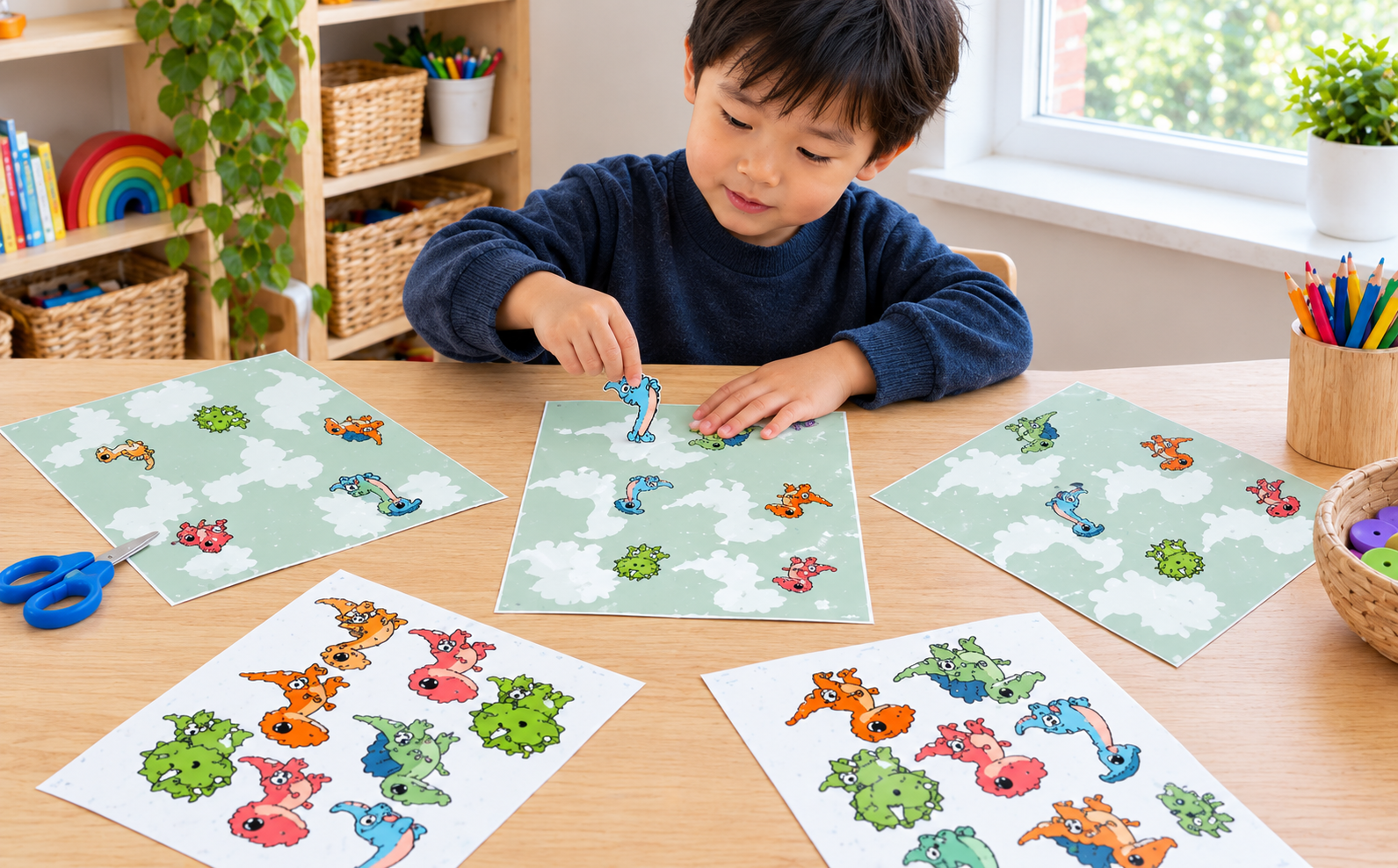
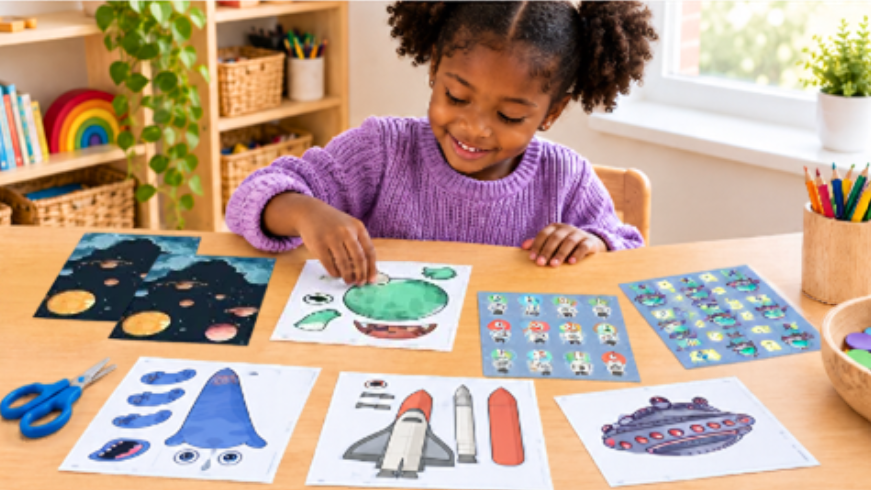
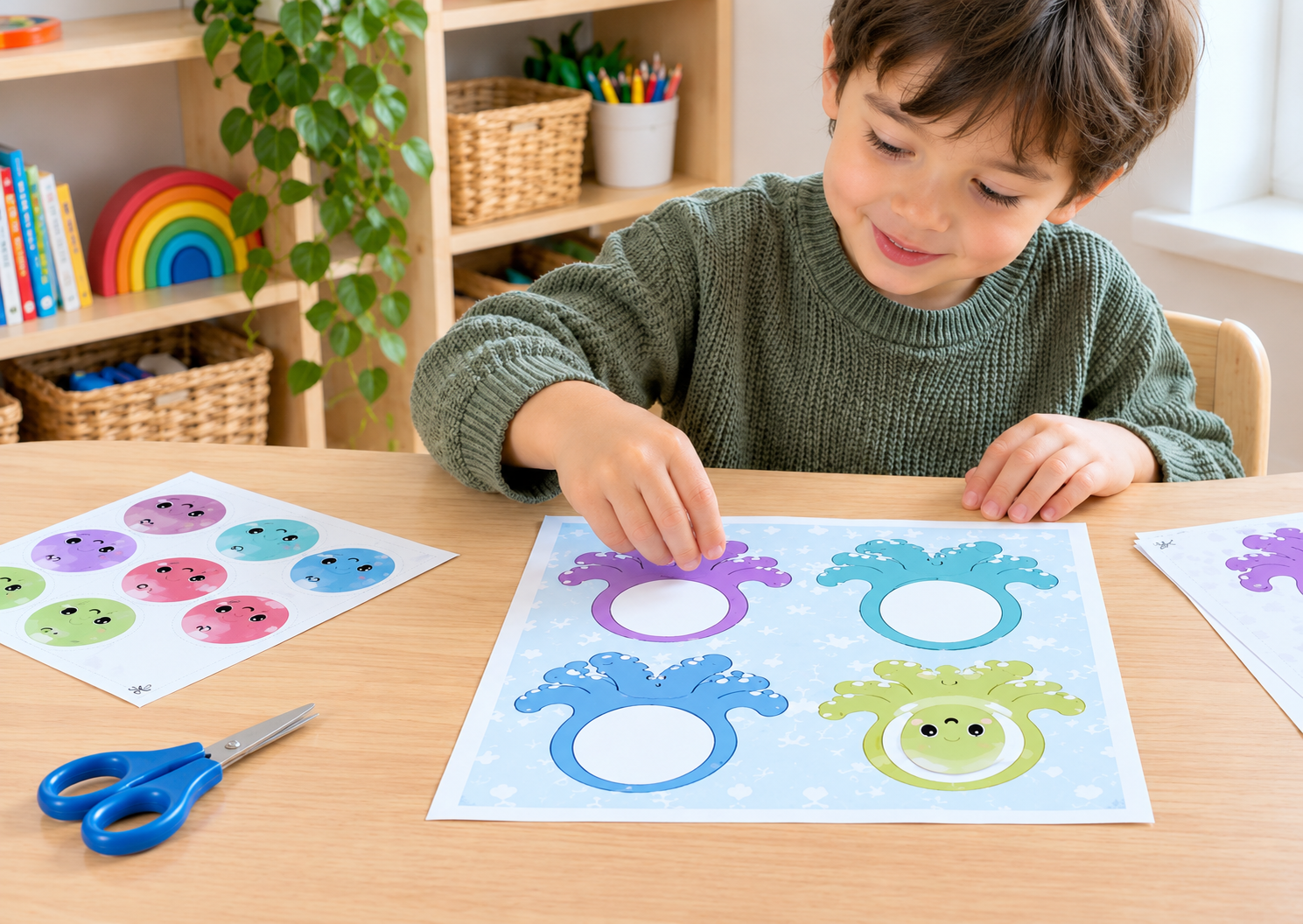
Matching letters, pictures, shapes, or objects.
Sorting materials by colour, size, shape, or category.
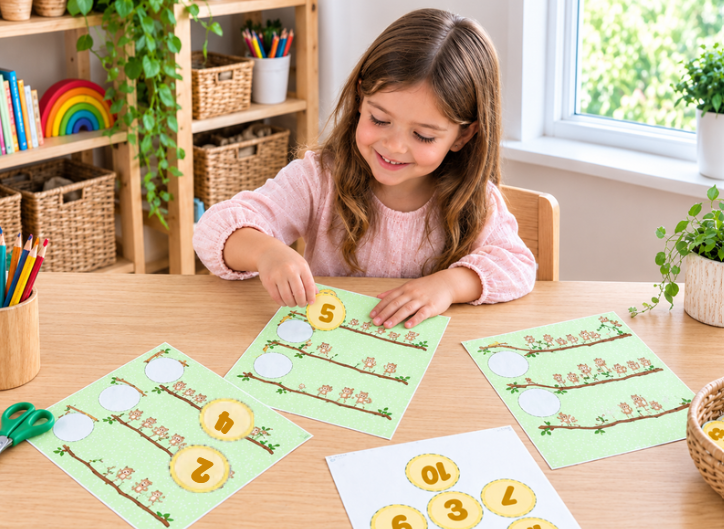
Counting objects and exploring number relationships.
Tracing lines, letters, and simple shapes.
Building patterns and completing sequences.
Manipulating playdough to explore shapes and strengthen hand muscles.
Using movable pieces to complete puzzles and interactive activities.
Exploring natural materials to observe textures, similarities, and differences.
These experiences allow children to participate directly in learning rather than remaining passive observers.
Hands-on learning also extends beyond traditional classroom materials. Everyday routines, sensory exploration, creative projects, and guided play can all provide opportunities for children to investigate ideas and practise emerging skills.
The key is active participation: children learn by interacting with their environment and engaging with the concepts they encounter.
How Active Exploration Helps Children Build Understanding
Young children do not simply absorb information. They build understanding as they explore, observe, experiment, and connect new experiences with what they already know.
Hands-on activities provide opportunities for this process to unfold naturally.
For example, a child learning about shapes may initially recognize a circle in a picture. When given physical shapes to handle, compare, and match, the child can explore their differences more directly. Turning the pieces, examining their edges, and comparing their sizes creates additional opportunities to understand the concept.
Similarly, counting objects allows children to connect number words with actual quantities. Moving each object while counting can help make the relationship between numbers and objects more concrete.
These experiences support learning in several important ways.
Learning Through Discovery
Children are often motivated to investigate when they can interact directly with what they are learning.
A sorting activity invites a child to compare objects and decide where they belong. A sequencing task encourages them to examine relationships and determine what comes next. A simple building activity allows them to test ideas and discover how different pieces fit together.
Through these experiences, children can begin identifying patterns, recognizing similarities, and making connections.
Discovery also encourages curiosity. When children have opportunities to explore and ask questions, learning becomes an active process rather than simply receiving information.
Connecting New Concepts to Familiar Experiences
New concepts can be easier to understand when children can connect them to something familiar.
A child who has handled blocks of different sizes may find it easier to explore concepts such as bigger, smaller, longer, and shorter. A child who regularly sorts objects may begin recognizing how items can be grouped according to shared characteristics.
Hands-on activities provide opportunities to revisit these concepts in different contexts.
Over time, children can begin applying what they have learned to new materials and situations, helping them build a broader understanding of the world around them.
Learning Through Trial and Error
Not every attempt will be successful the first time, and that is part of the learning process.
When completing a puzzle, continuing a pattern, or matching related items, children may need to try different approaches before finding a solution.
These experiences give them opportunities to compare possibilities, adjust their choices, and try again.
With appropriate guidance, children can learn to approach challenges with curiosity rather than immediately giving up when something feels difficult.
Trial and error can also encourage persistence and problem-solving, skills that remain valuable throughout school and beyond.
The Essential Skills Children Practise Through Hands-On Learning
Hands-on learning supports opportunities to practise a wide range of foundational skills. Because activities often involve several types of engagement, children may strengthen different abilities during a single learning experience.
The skills practised will depend on the activity, the child's developmental stage, and the support provided.
1. Fine Motor Skills and Hand-Eye Coordination
Fine motor skills involve the small muscles of the hands and fingers. These movements contribute to everyday tasks such as drawing, manipulating objects, using utensils, and beginning to write.
Hands-on preschool activities can provide valuable opportunities to practise these movements.
Placing small pieces, turning cards, tracing lines, manipulating playdough, and positioning objects all encourage children to coordinate their hand movements with what they see.
For example, a matching activity that requires children to pick up and position individual pieces combines visual attention with controlled hand movements.
With regular opportunities to practise, children can build familiarity with these movements and strengthen the coordination needed for increasingly complex tasks.
2. Cognitive Skills and Problem-Solving
Cognitive skills help children process information, recognize relationships, remember details, and solve problems.
Hands-on activities encourage children to think about what they are doing as they interact with materials.
A sequencing activity may require a child to identify an order. A sorting task may ask them to recognize shared characteristics. A puzzle may encourage them to compare shapes and determine where each piece belongs.
These experiences create opportunities to practise:
Visual perception and discrimination.
Memory and recall.
Attention and concentration.
Pattern recognition.
Logical reasoning.
Problem-solving.
By engaging directly with the task, children have opportunities to make decisions, test their understanding, and adjust their approach when necessary.
3. Early Literacy and Language Skills
Early literacy begins well before children learn to read independently.
During the preschool years, children start recognizing letters, noticing sounds, building vocabulary, and understanding how language works.
Hands-on literacy activities can help children explore these concepts in interactive ways.
Matching uppercase and lowercase letters, arranging letters in sequence, tracing letter shapes, and identifying pictures that begin with particular sounds can provide opportunities to practise foundational literacy skills.
These activities can also encourage conversation. Adults can introduce new vocabulary, ask children to describe what they notice, and invite them to explain their choices.
Connecting visual information, physical actions, and language gives children different ways to engage with early literacy concepts.
4. Early Math and Logical Thinking
Early mathematical understanding develops through experiences that help children notice quantities, compare objects, recognize patterns, and understand relationships.
Hands-on activities can make these concepts more accessible by allowing children to work directly with materials.
Counting objects, matching numerals to quantities, sorting shapes, comparing sizes, and completing patterns all provide opportunities to practise early math skills.
For example, a child can move objects one at a time while counting, helping connect the number sequence with the items being counted.
Similarly, arranging shapes by size or continuing a repeating pattern allows children to observe relationships and apply what they notice.
These early experiences help establish a foundation for more complex mathematical learning.
5. Independence and Confidence
Hands-on activities can also provide opportunities for children to take an active role in their learning.
When children choose pieces, follow a sequence, complete a matching task, or work through a puzzle, they practise making decisions and managing parts of the learning process themselves.
Some activities may be completed independently, while others require demonstration, encouragement, or adult guidance.
As children become more familiar with a task, they may need less support to complete it. Recognizing this progress can help them feel more confident about approaching new challenges.
Importantly, independence does not mean children must work alone. Encouragement, conversation, and appropriately timed guidance remain valuable parts of the learning experience.
The goal is to provide opportunities for children to participate, practise, and gradually take greater ownership of their learning.
Why Repetition Matters in Hands-On Learning
Children often need to encounter a concept more than once before they become comfortable applying it.
Repeated practice gives them opportunities to strengthen familiarity, recognize patterns, and revisit skills that may still be emerging.
For example, a child may initially need help matching letters or completing a sequence. After several opportunities to practise, the same task may become easier, allowing the child to focus on new challenges.
Repetition can also help adults observe how a child's understanding changes over time.
A familiar activity may reveal whether a child can complete a task independently, recognize a concept in a different context, or benefit from additional support.
This is one reason reusable learning materials can be valuable in early childhood settings.
Laminated activities, movable pieces, matching cards, and reusable Busy Books allow children to return to familiar tasks without requiring a completely new activity each time.
For educators and families, having these materials available can make it easier to incorporate repeated practice into everyday learning routines.
The value of repetition is not simply doing the same task again. It is giving children another opportunity to strengthen their understanding.
The Role of Adults in Hands-On Learning
Although hands-on learning encourages children to explore actively, adults continue to play an important role.
Educators and families help create an environment where children feel comfortable investigating materials, asking questions, and trying unfamiliar tasks.
Sometimes, this means demonstrating how an activity works. At other times, it means asking an open-ended question, offering a small hint, or giving a child time to work through a challenge independently.
For example, rather than immediately showing a child where a puzzle piece belongs, an adult might ask, "What do you notice about its shape?" This encourages the child to examine the available information and consider possible solutions.
Adults can also adapt activities to match children's abilities.
A child who is beginning to recognize shapes may benefit from matching two identical pieces. A child who is more familiar with the concept might be ready to sort shapes into categories or identify them by name.
Observing children's responses helps adults determine when to provide support, when to simplify a task, and when to introduce a greater challenge.
The most effective hands-on experiences combine opportunities for active exploration with thoughtful guidance that supports learning without taking over the process.
Bringing More Hands-On Learning into Everyday Routines
Hands-on learning does not require elaborate materials or complicated lesson plans. Many meaningful opportunities can be incorporated into everyday routines with simple, purposeful activities.
Here are a few practical ways to encourage active exploration at home or in the classroom.
Explore matching and sorting. Invite children to match pictures, pair related objects, or sort materials by colour, shape, size, or category. These activities provide opportunities to practise visual discrimination, classification, and early reasoning.
Introduce tracing and manipulation activities. Tracing lines, following simple paths, and moving pieces into position can help children practise fine motor coordination and controlled movements.
Make early math concrete. Use counting activities, number-matching games, and sequencing tasks to help children explore quantities, patterns, and relationships.
Encourage repetition. Keep familiar activities available so children can revisit concepts and practise skills as their understanding grows.
Offer opportunities for choice. Allow children to select between appropriate activities or decide how to approach a task. This can encourage engagement and give them opportunities to practise decision-making.
Adjust the level of challenge. Introduce additional steps, reduce the amount of support, or simplify an activity according to the child's current abilities.
Consistency matters more than complexity. Regular opportunities to explore, practise, and revisit concepts can help make hands-on learning a meaningful part of children's everyday experiences.
Choosing Hands-On Learning Activities That Support Children's Growth
With so many preschool activities available, choosing materials that fit your learning goals can make planning more manageable.
Look for activities that invite children to participate rather than simply observe. Consider whether the task offers opportunities to manipulate materials, make decisions, practise a skill, or explore a concept.
It is also helpful to consider the child's developmental stage, interests, and current abilities. An activity should offer an appropriate level of challenge while allowing room for guidance and success.
Reusable learning resources can be particularly practical when children benefit from repeated opportunities to practise. Printable matching activities, hands-on Busy Books, tracing pages, and interactive learning materials can provide structured ways to revisit concepts at home or in the classroom.
The best choice depends on what the child is learning and how the activity fits into the broader learning experience.
When activities encourage active participation, they can help turn everyday learning opportunities into meaningful moments of exploration and practice.
Support Active Learning with Watch Them Learn
Children learn by engaging with the world around them. Through touching, matching, sorting, tracing, experimenting, and solving problems, they have opportunities to build understanding while practising the essential skills that support future learning.
Hands-on learning helps make these experiences tangible. It gives children opportunities to participate actively, revisit concepts, and apply what they discover.
For educators and families looking to bring more hands-on learning into everyday routines, having practical activities ready to use can make a difference.
Watch Them Learn offers a collection of printable educational resources and reusable Busy Books that provide opportunities for children to explore concepts and practise essential early learning skills.
Whether you are supporting early literacy, introducing mathematical concepts, strengthening fine motor skills, or encouraging cognitive development, you can explore resources suited to a variety of learning goals and environments.
Make room for more exploration, more practice, and more meaningful learning.
Explore the Watch Them Learn collection to find hands-on educational activities that support children's learning journey.
Watch Them Learn — Where essential skills grow and lifelong learning begins.