What Is Hands-On Learning? A Guide for Early Childhood Education
What Is Hands-On Learning?
Hands-on learning is an approach where children actively engage with concepts through exploration, interaction, and practice.
Rather than simply receiving information, children participate in the learning process by manipulating materials, testing ideas, making decisions, and discovering solutions.
This approach encourages children to become active thinkers. Instead of focusing only on finding the correct answer, they have opportunities to investigate how things work, explore different possibilities, and learn through experience.
Instead of asking only, "What is the answer?", children begin to ask:
"How does this work?"
"Why does this happen?"
"What can I try next?"
These questions encourage curiosity, problem-solving, and deeper understanding.
In early childhood education, hands-on learning can take many forms, from sorting shapes and matching letters to building patterns, manipulating playdough, and completing interactive learning activities. Each experience gives children an opportunity to engage directly with the concepts they are exploring.
How Does Hands-On Learning Work?
Hands-on learning allows children to connect new information with direct experience. By interacting with objects and materials, they can observe results, recognize relationships, and practise applying what they learn.
For example, when a child learns about shapes, looking at pictures of circles, squares, and triangles introduces the concepts visually. Handling shape pieces, comparing their features, and matching identical shapes provides additional opportunities to explore those differences.
Similarly, a child learning to count can practise by moving objects one at a time while saying each number aloud. This helps connect number words with quantities in a tangible way.
The learning process often involves several interconnected steps:
Explore: Children interact with materials and become familiar with the task or concept.
Observe: They notice similarities, differences, patterns, and relationships.
Experiment: They try different approaches and discover what happens.
Practise: They repeat actions and apply what they are learning.
Reflect: With appropriate guidance, they consider what worked and what they might try next.
These steps do not always happen in a fixed order. Children may move between exploration, experimentation, and practice as they build their understanding.
The important distinction is that children are actively involved in the learning process rather than simply observing or memorizing information.
Examples of Hands-On Learning in Early Childhood
Hands-on learning is not limited to science experiments or messy play. It can be incorporated into everyday preschool activities, structured learning tasks, and playful exploration.
Here are several examples of how children can engage actively with early learning concepts.
Matching and Sorting Activities
Matching and sorting activities invite children to compare objects, recognize similarities, and identify differences.
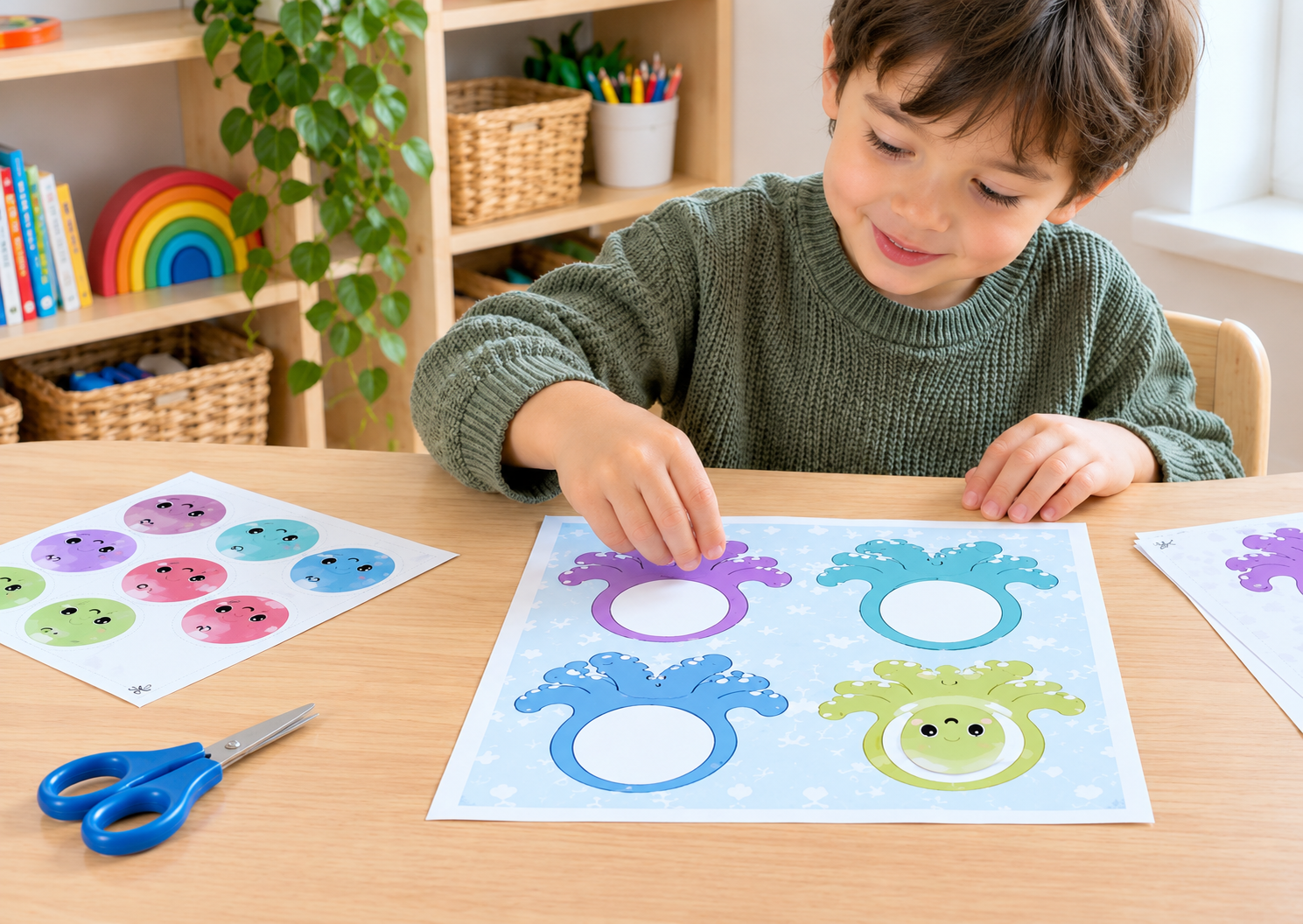
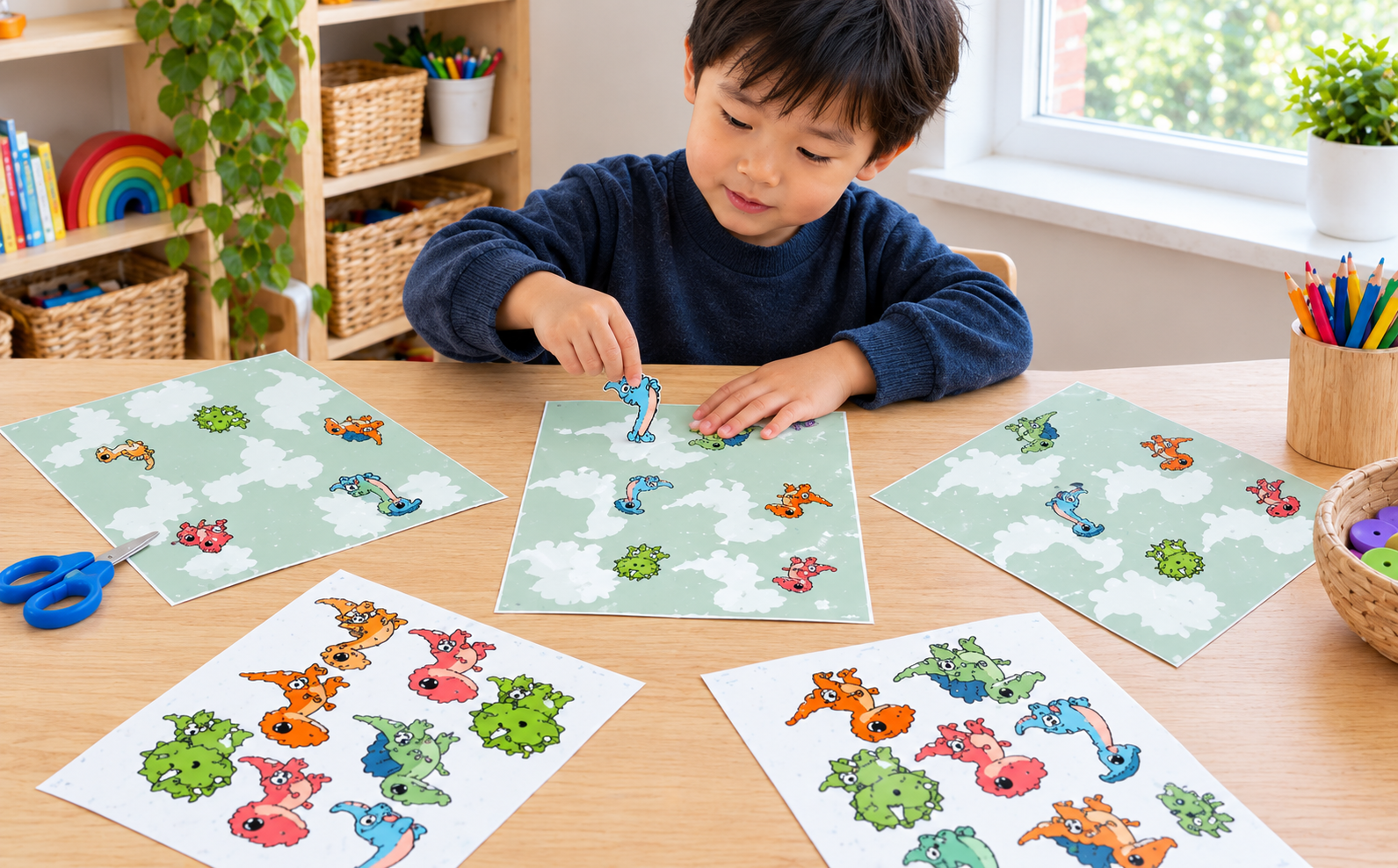
Children might match identical pictures, pair uppercase and lowercase letters, sort shapes by colour, or group animals according to shared characteristics.
These activities provide opportunities to practise visual discrimination, classification, attention, and early reasoning.
Early Literacy Activities
Children can explore early literacy through activities that involve touching, moving, tracing, and identifying letters.
For example, matching letter cards, arranging letters in sequence, tracing letter shapes, or pairing pictures with beginning sounds allows children to interact directly with early literacy concepts.
These experiences can reinforce letter recognition, phonological awareness, and vocabulary while providing opportunities for guided practice.
Early Math Activities
Hands-on mathematics helps children explore numbers, quantities, shapes, and patterns through direct interaction.
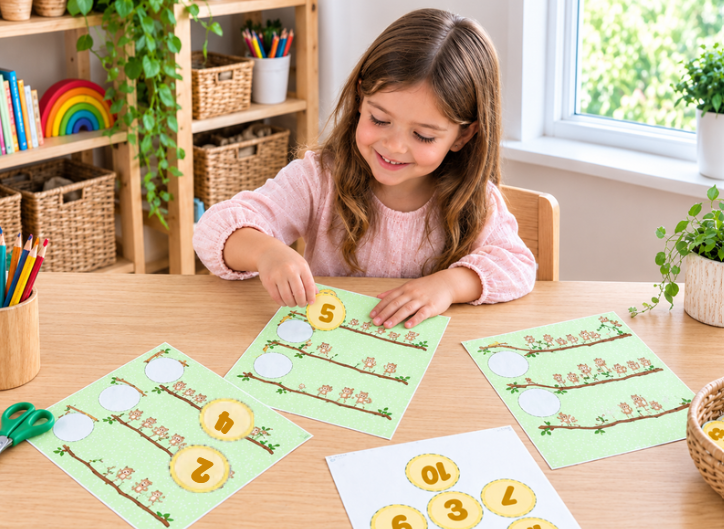
Counting objects, matching numerals to quantities, arranging shapes, and completing repeating patterns can help children recognize relationships and apply mathematical concepts.
Instead of encountering numbers only as symbols on a page, children can work with materials that make quantities and relationships easier to explore.
Playdough and Fine Motor Activities
Manipulating playdough, tracing lines, placing small pieces, and following simple paths all provide opportunities for children to practise controlled hand movements.
Depending on the task, these activities can support fine motor coordination, hand-eye coordination, and pre-writing skills.
They can also combine physical exploration with opportunities to recognize shapes, follow instructions, and practise other learning objectives.
Interactive Busy Books and Printable Activities
Hands-on learning can also take place through structured, reusable educational resources.
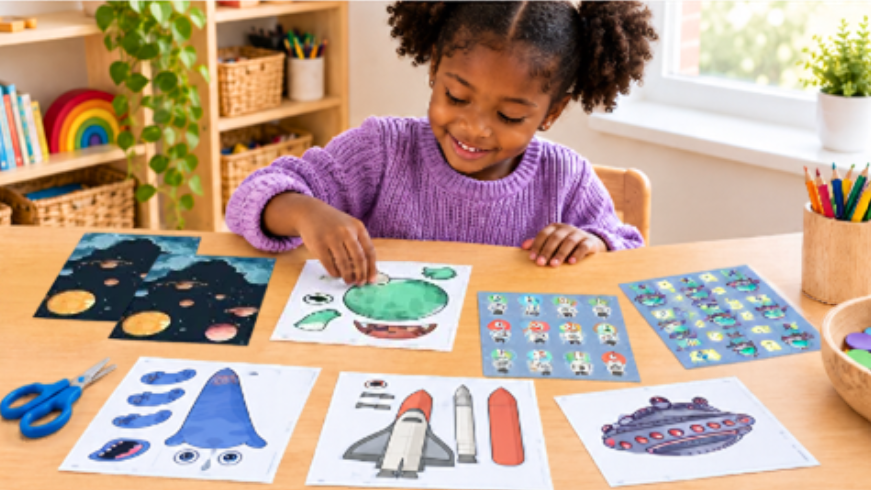
Busy Books, matching pages, sequencing activities, and interactive printable materials allow children to move pieces, make selections, complete tasks, and revisit familiar concepts.
For example, a child might match animals to their habitats, sequence stages in a life cycle, or place numerals beside corresponding quantities.
These activities provide a structured way to practise specific concepts while allowing adults to adjust the level of guidance and challenge.
What Skills Can Hands-On Learning Support?
Hands-on learning can provide opportunities to practise a wide range of skills during early childhood. The specific benefits depend on the activity, the child's developmental stage, and how the experience is introduced.
Cognitive skills: Sorting, sequencing, matching, and problem-solving activities encourage children to recognize patterns, compare information, and make decisions.
Fine motor skills: Tracing, manipulating pieces, and positioning objects provide opportunities to practise hand control and coordination.
Early literacy: Letter matching, tracing, and sound-based activities can reinforce foundational reading and language skills.
Early mathematics: Counting, sorting, patterning, and shape recognition activities help children explore mathematical concepts.
Attention and concentration: Completing a task encourages children to focus on instructions, examine details, and work toward a goal.
Independence: Familiar activities can give children opportunities to make decisions, complete steps, and practise skills with gradually reduced assistance.
Hands-on learning can also encourage curiosity and persistence by allowing children to investigate questions and try different approaches.
These skills develop over time through varied experiences, appropriate guidance, and opportunities for repeated practice.
Hands-On Learning vs. Passive Learning
Hands-on learning differs from approaches in which children primarily listen to explanations, watch demonstrations, or observe information being presented.
Both approaches can have a place in early childhood education. Listening to a story, watching a demonstration, or receiving an explanation can introduce valuable information. Hands-on experiences provide additional opportunities for children to apply, explore, and practise what they have encountered.
Consider the difference when introducing patterns.
Passive experience: A child watches an adult demonstrate a red-blue-red-blue pattern.
Hands-on experience: The child uses coloured pieces to recreate the pattern, identify what comes next, and experiment with creating a new sequence.
The second experience invites the child to participate directly in applying the concept.
Similarly, explaining how objects can be sorted introduces the idea, while giving children materials to classify allows them to practise identifying similarities and differences.
In many learning situations, combining explanation, demonstration, and hands-on practice can provide a valuable balance.
The goal is not to eliminate listening or observation. It is to give children meaningful opportunities to participate in what they are learning.
How to Incorporate Hands-On Learning into Everyday Routines
Hands-on learning does not require elaborate equipment or complicated preparation. Simple activities can provide valuable opportunities to explore concepts and practise skills.
Here are a few practical ways to incorporate active learning into everyday routines:
Offer materials children can manipulate. Use picture cards, shape pieces, counting objects, or reusable activity pages to encourage direct interaction.
Ask open-ended questions. Invite children to explain what they notice, predict what might happen, or suggest another way to complete a task.
Encourage experimentation. Give children opportunities to try different approaches and learn from the results.
Make room for repetition. Keep familiar activities available so children can revisit concepts and practise emerging skills.
Adjust the level of challenge. Simplify a task or introduce an additional step according to the child's current abilities.
Allow time for independent exploration. Give children opportunities to make decisions before stepping in with guidance.
The most effective approach depends on the child and the learning objective. Some experiences will benefit from adult demonstration, while others may be more valuable when children have time to explore independently.
A balance of guidance, exploration, and practice helps create opportunities for meaningful participation.
Why Hands-On Learning Resources Can Be Valuable
Having suitable learning materials available can make it easier to incorporate hands-on activities into classrooms and home learning routines.
Printable educational activities, reusable Busy Books, matching cards, tracing pages, and interactive learning resources provide structured opportunities for children to explore concepts and practise specific skills.
Reusable materials can be particularly helpful when children benefit from revisiting a familiar task. Once prepared, many activities can be used repeatedly, allowing children to practise without requiring a completely new resource each time.
For educators, these materials can complement classroom learning. For parents and homeschoolers, they provide practical ways to reinforce concepts at home. Therapists and special educators can also adapt appropriate activities to support individual learning objectives.
When choosing hands-on learning resources, consider the concept being introduced, the skills the activity allows children to practise, and whether the task is appropriate for their developmental stage.
The goal is to find activities that encourage children to participate actively and give them opportunities to apply what they are learning.
Help Children Learn Through Active Exploration
Hands-on learning gives children opportunities to do more than receive information. They can investigate, experiment, practise, and discover relationships between the concepts they encounter.
From matching letters and counting objects to completing patterns and exploring interactive activities, these experiences can make early learning more engaging and provide valuable opportunities to practise essential skills.
For educators and families looking to incorporate more active learning into everyday routines, practical educational resources can help make these experiences easier to prepare and repeat.
At Watch Them Learn, our collection of printable educational resources and reusable Busy Books offers hands-on activities designed to support essential early learning skills across a variety of subjects and concepts.
Explore our collection to find activities that encourage children to participate, practise, and build understanding through active exploration.
Watch Them Learn — Where essential skills grow and lifelong learning begins.